
⚡ Vetroo 850W SFX Review: The "Cheap" Option the Small Form Factor Needed?
Building a compact PC (SFF) usually hurts the wallet, mainly due to the high cost of SFX power supplies. Vetroo arrives on the market promising an 850W solution with the latest ATX 3.1 and PCIe 5.1 standards at a competitive price. But where's the catch? We analyze its internal components and its unusual cable configuration, and tell you why, although it has Japanese capacitors, we must be cautious with its fan.
By Daniel Suarez3 min read
In this article
The world of Small Form Factor (SFF) has always had a major entry barrier: the price of components. SFX power supplies tend to be considerably more expensive and scarce than their traditional ATX counterparts.
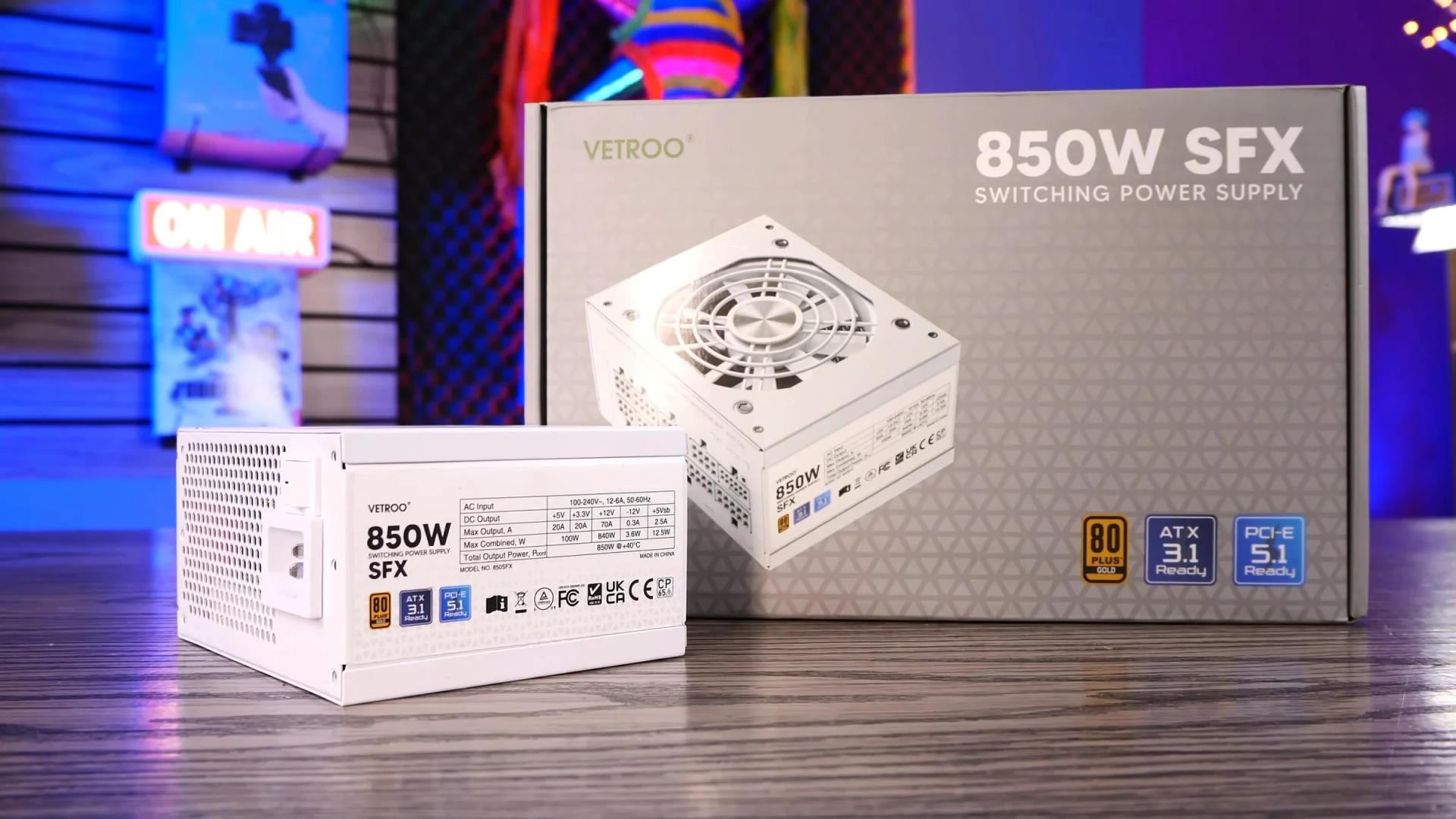
This is where Vetroo comes in, offering a compact power supply (SFX), 850W of power and modern certifications. The promise is tempting, but at Droga Digital and PSU Gang we didn't stop at the box; let's see what's inside.
Modern Standards and the 12V-2x6 Cable
Vetroo has decided to play it safe regarding regulations, adopting the ATX 3.1 standard for this unit. This is important because it includes the safest revision of the controversial graphics card power connector, implementing the 12V-2x6 cable rated at 600W.
This ensures native compatibility and theoretical safety for the most powerful graphics cards in the RTX 40 series and future generations.
The Cable Dilemma: Too Short?
We know in advance that cables in SFX power supplies are designed for small cases, but Vetroo has taken this to the extreme.
- 24-pin cable length: 300mm.
- Usual standard: 600mm.
Important warning: With only 30 cm of length on the main cable, we do not recommend trying to use this power supply in ATX or Mid-Tower cases, even with bracket adapters. The cables simply won't reach. This power supply is strictly for very compact ITX builds.
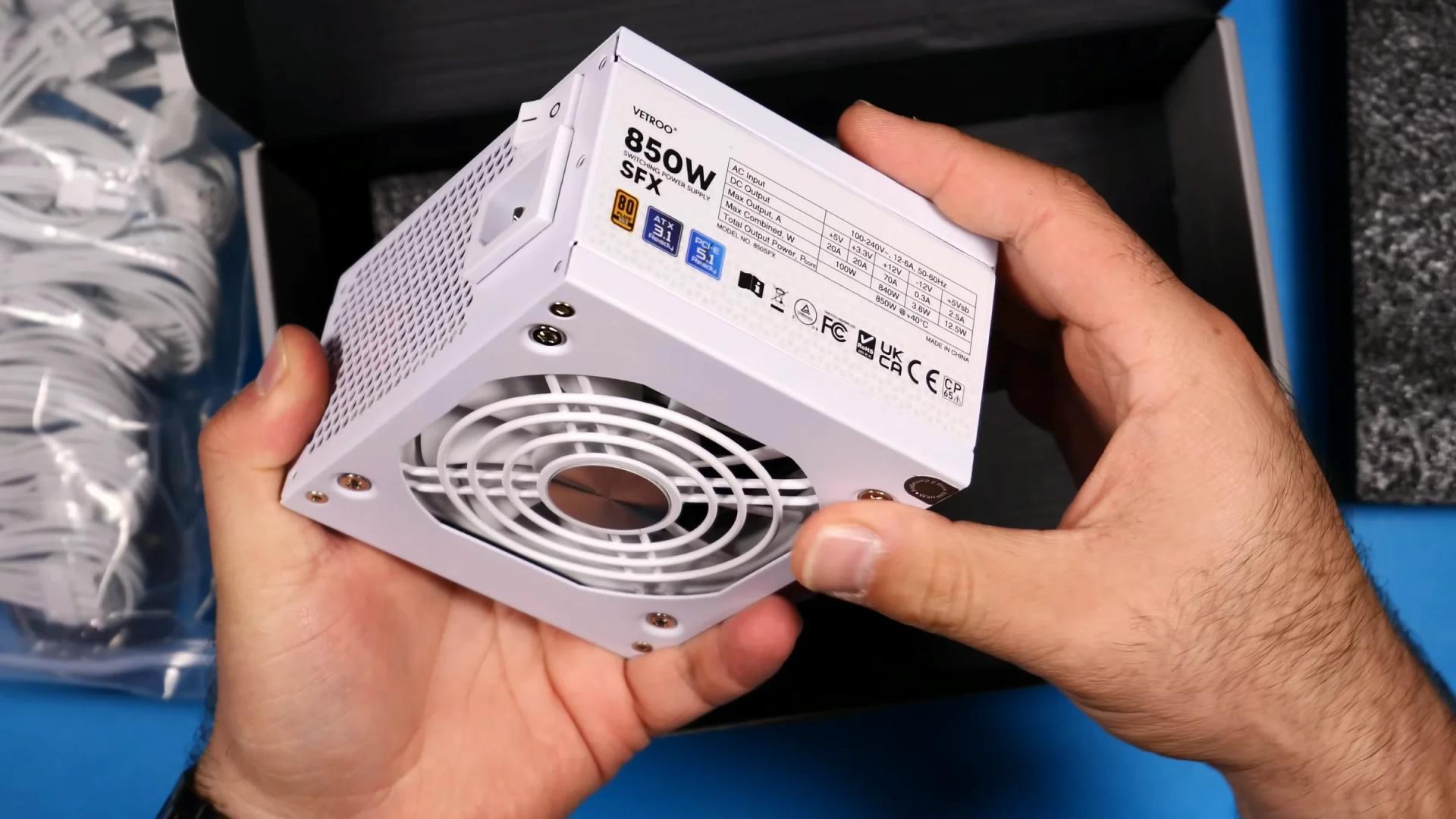
Regarding GPU connectivity, we found an interesting configuration: it includes a traditional 8-pin PCI cable and a 12+4-pin cable that splits into two 8-pin outputs, offering broad compatibility for cards that don't use the native 12VHPWR connector.
Internal Analysis: Highs and Lows
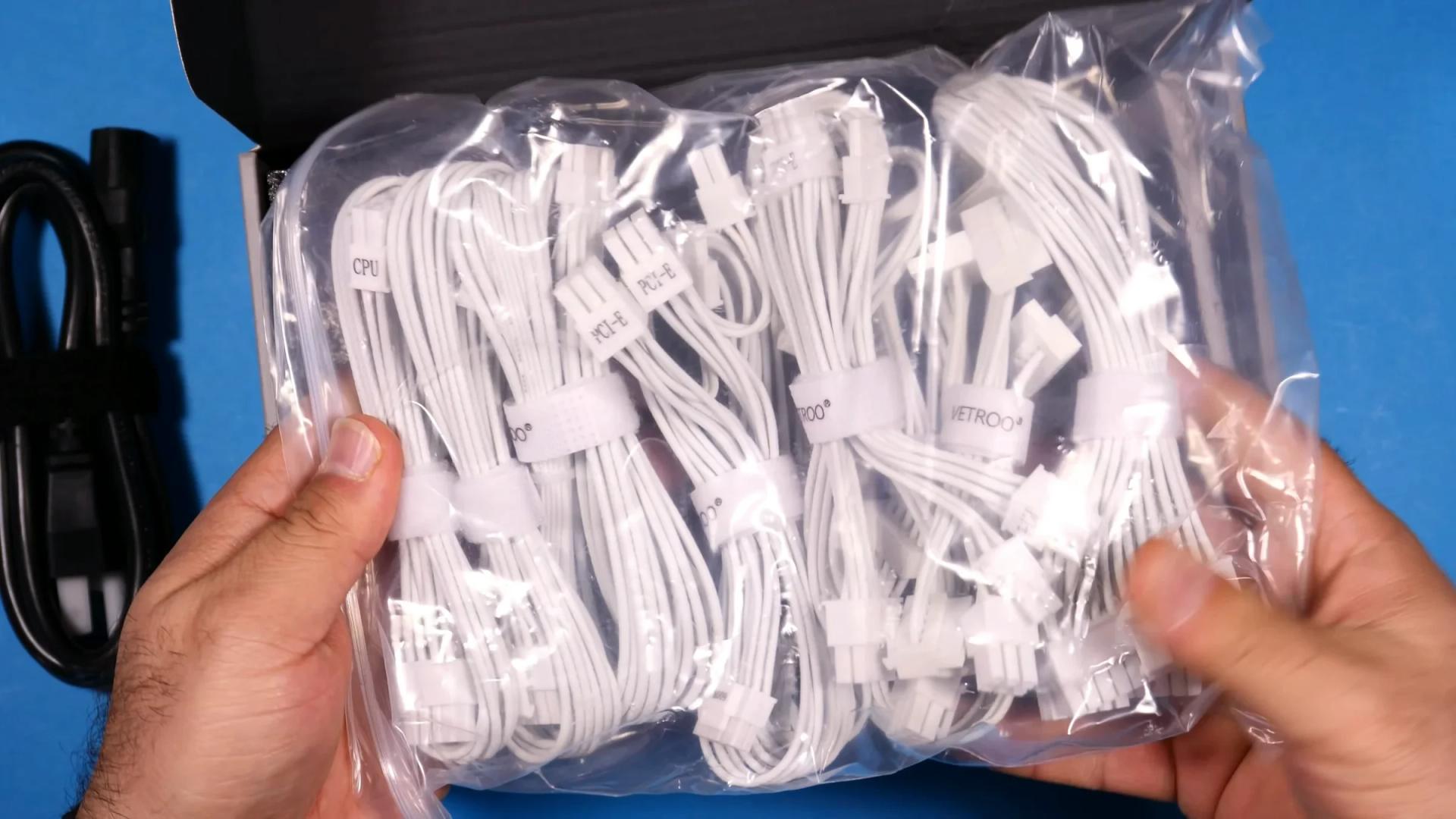
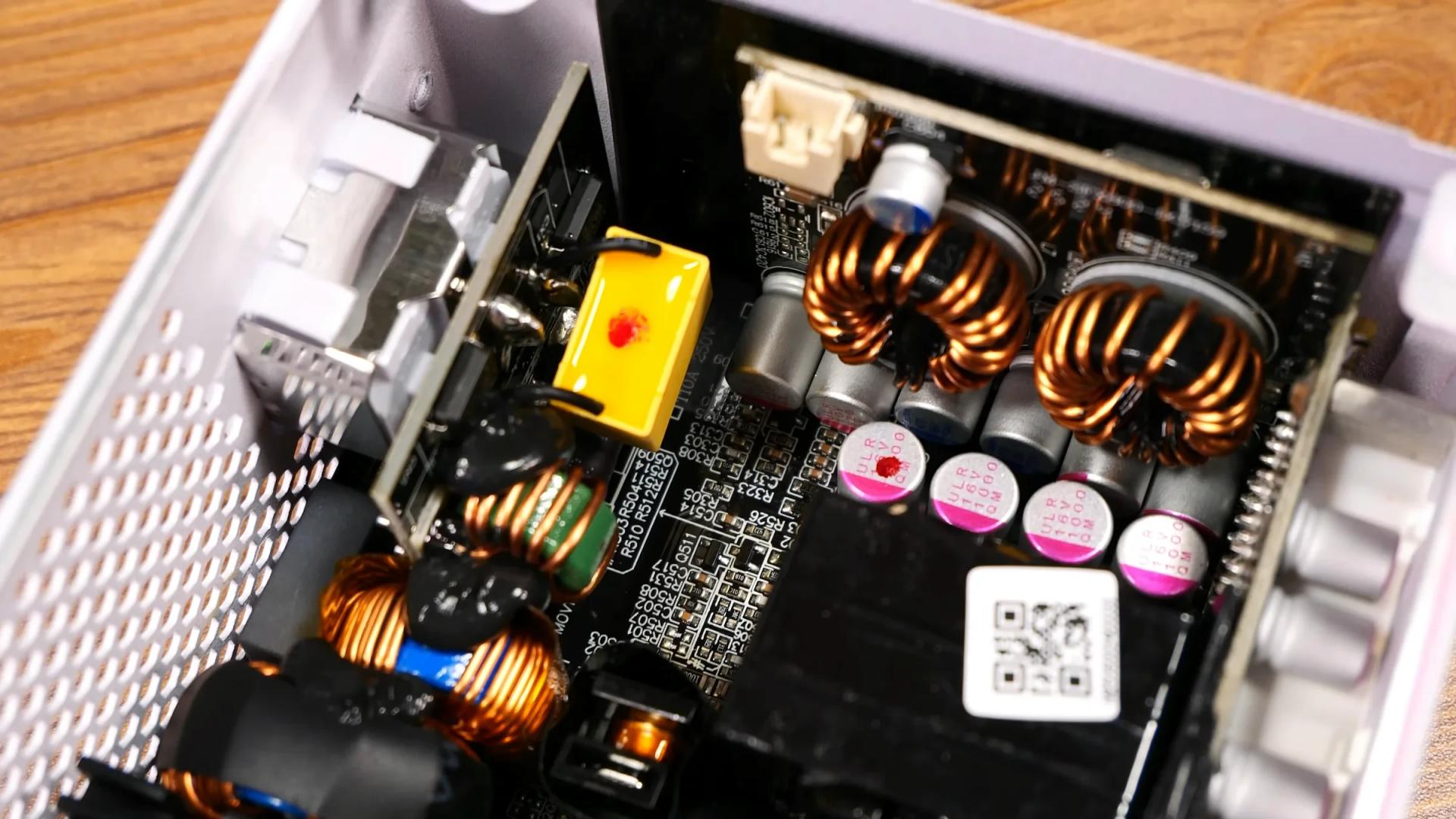
Unfortunately, we have no public information about the OEM (original manufacturer) or the specific platform Vetroo chose to use, but after opening it, we found revealing data.
The Topology: Vetroo uses a modern and efficient configuration:
- Primary: APFC, LLC-Half Bridge.
- Secondary: Synchronous Rectification and DC-DC converters.
This is the minimum we expect from a modern power supply in 2025 to ensure voltage stability.
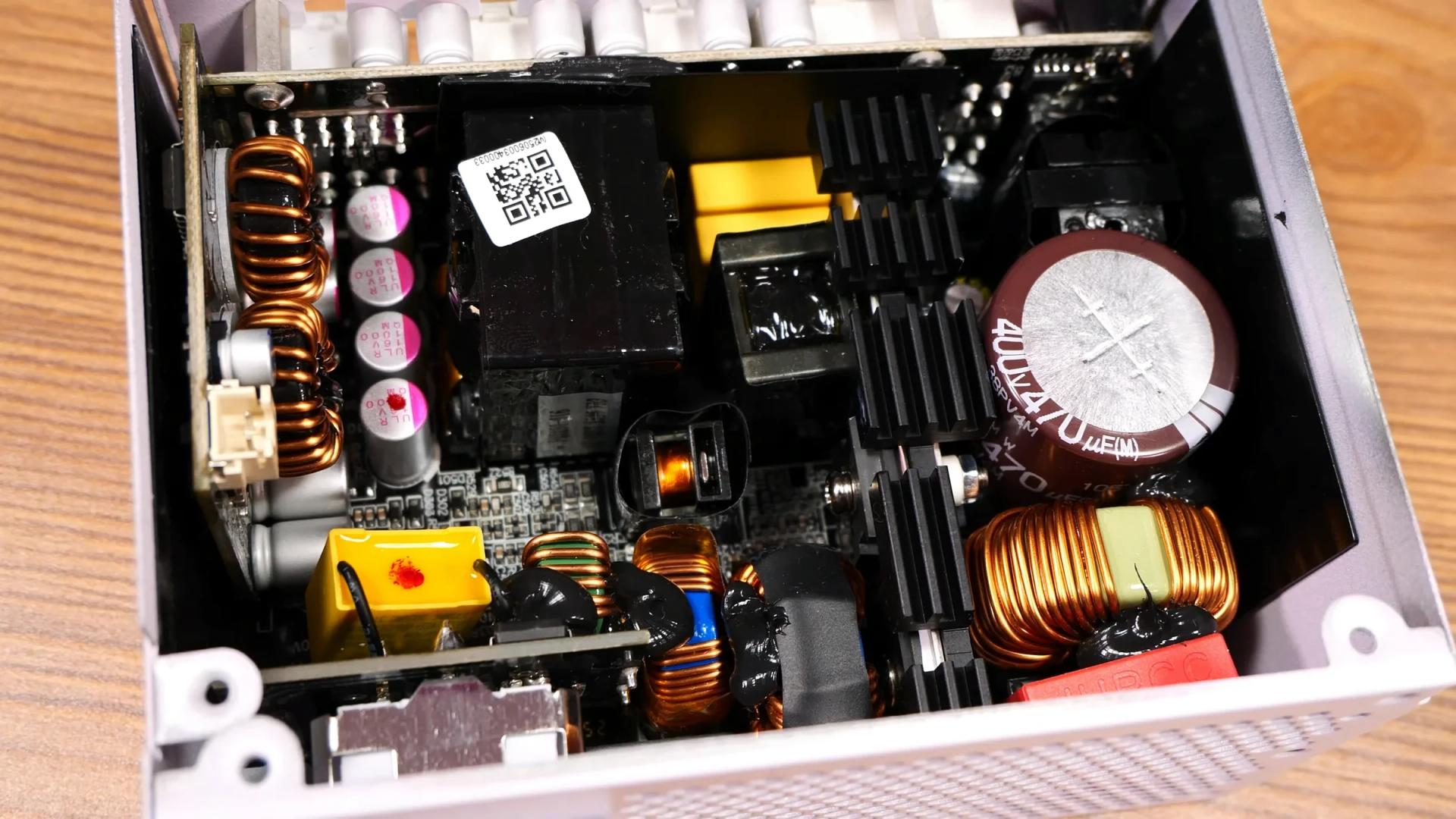
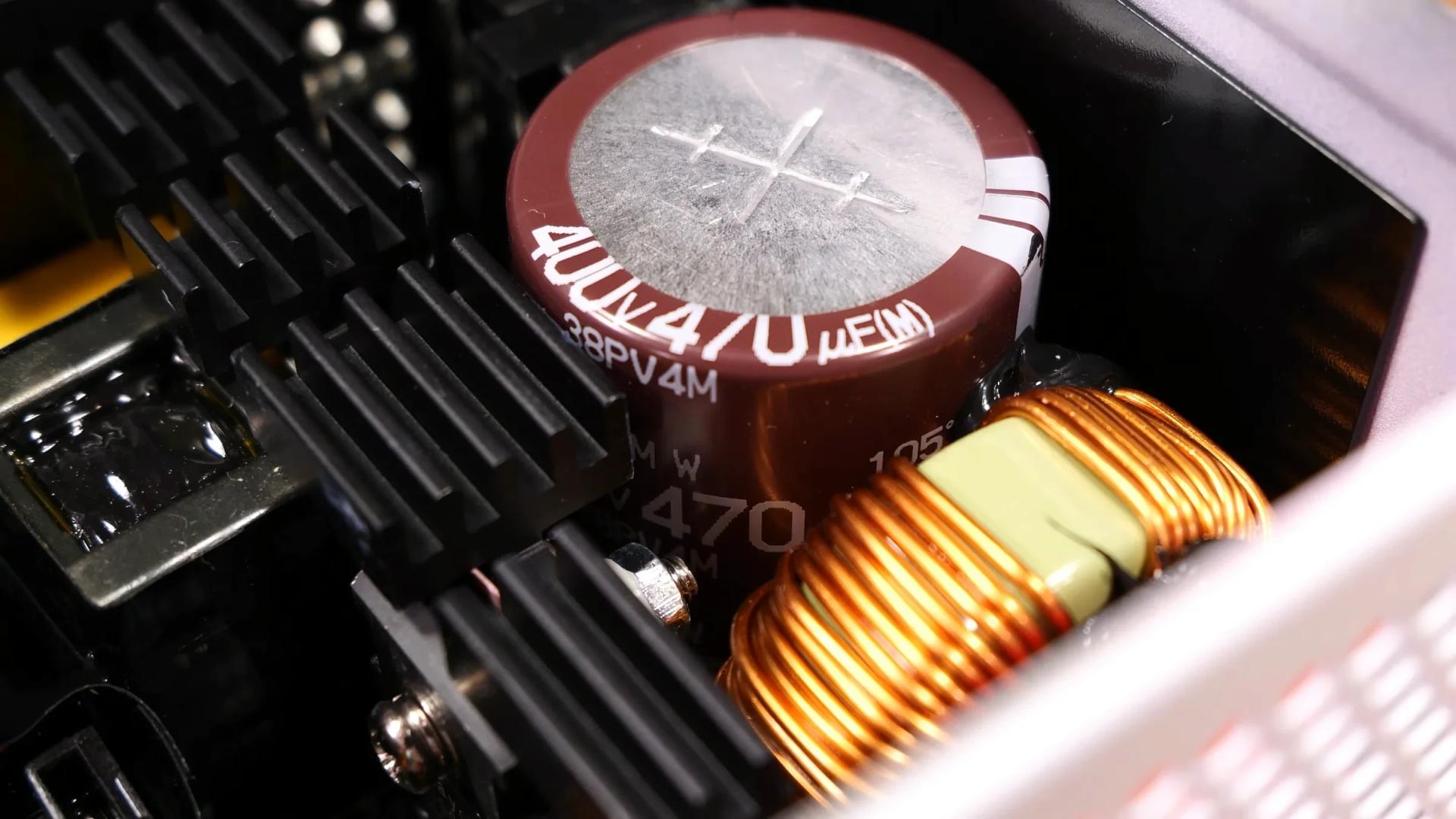
The Heart (Capacitors): Here we had a pleasant surprise. The main capacitor is a Nippon Chemi-Con KMW series (400V 470uF). It is a Japanese capacitor from a brand that is completely reliable and respected in the industry. Vetroo did not skimp on the main energy storage component.
The Achilles' Heel (Fan): This is where we find the "cost-cutting".
- Fan: PowerYear PY 9215H12S.
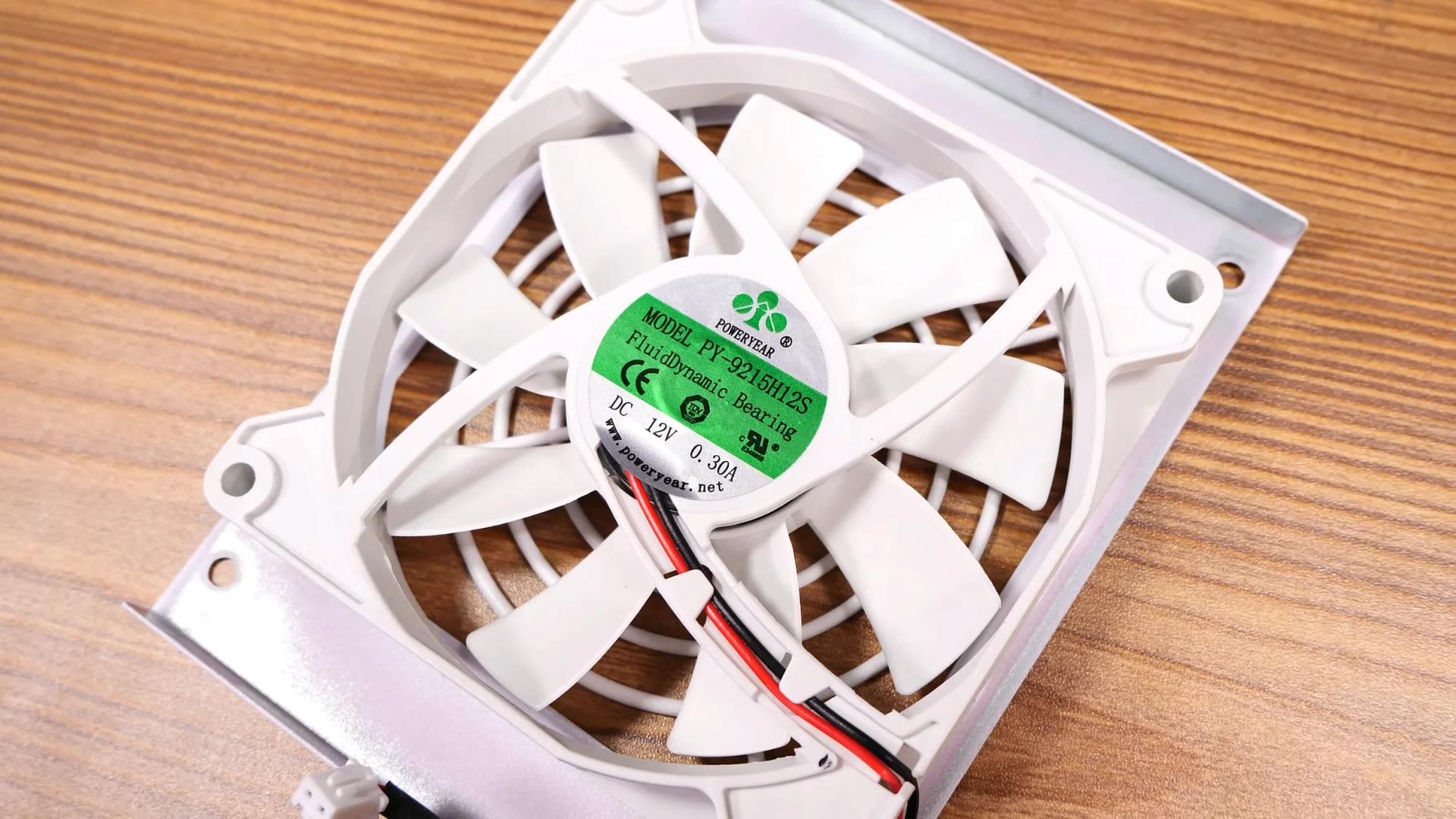
Although it fulfills its function, PowerYear does not reach the acoustic reliability and durability of brands such as Hong-Hua or Yate-Loon, which are the standards in higher-end power supplies. In an SFX format where heat concentrates more, the fan is a critical part, and this choice raises doubts for us in the long term.
Verdict
The Vetroo 850 SFX is a mix of good intentions and strategic cuts. On one hand, it gives us ATX 3.1 standards and a high-quality Japanese main capacitor. On the other, it limits us with extremely short cables and a low-end fan.
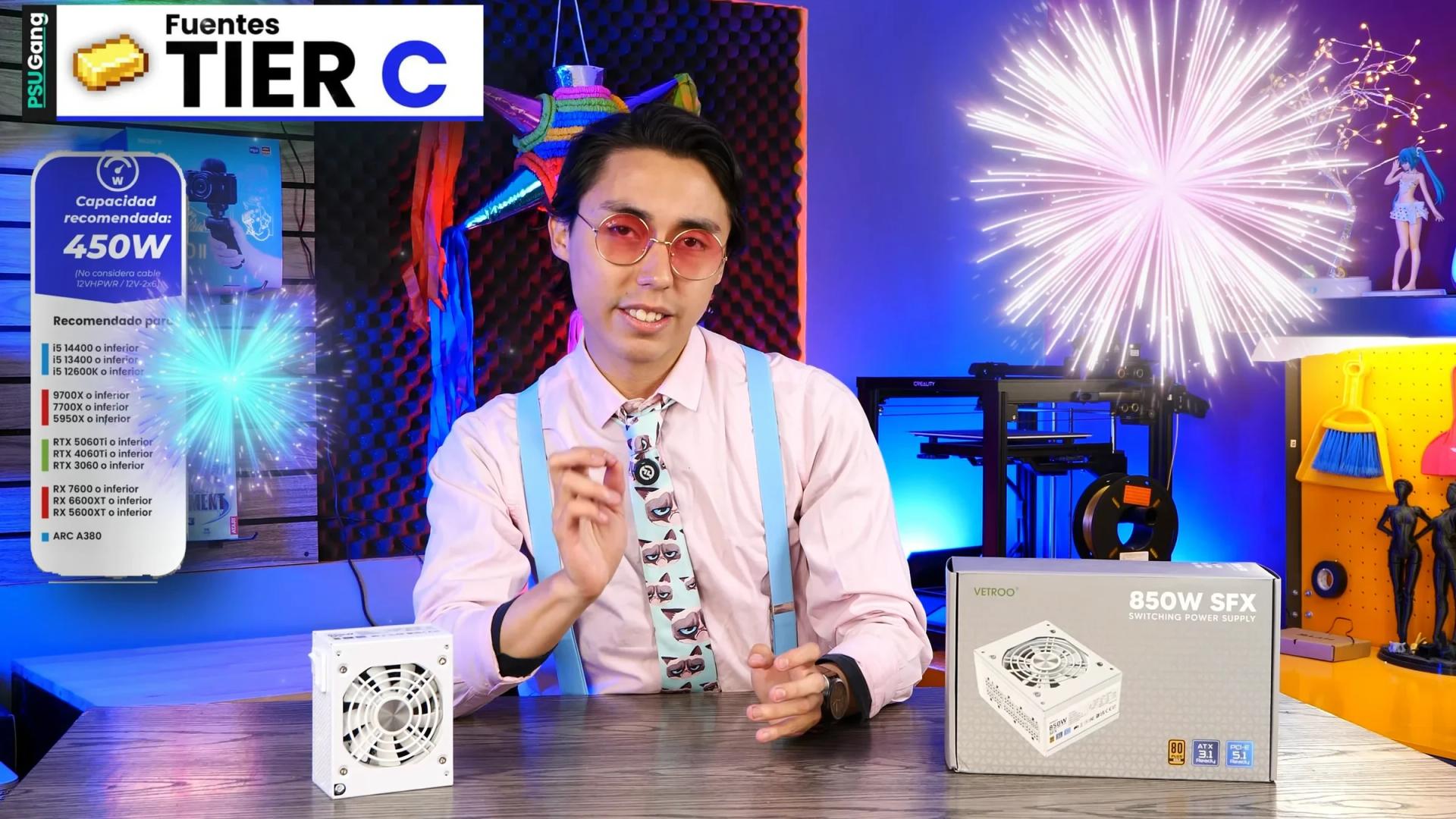
Due to these cuts and the lack of stress testing with specialized equipment (oscilloscopes and variable loads), PSU Gang gives it a rating of:
⚠️ TIER C (Provisional)
It is a viable option if your budget is tight and you absolutely need the SFX format, but it is not the definitive power supply for ultra-high-end systems where long-term reliability is non-negotiable.
Share
- X(opens in a new tab)
- Facebook(opens in a new tab)
- WhatsApp(opens in a new tab)
- Reddit(opens in a new tab)